‘Legacy? It’s happening already via clubs and volunteers’ – Colin Hutchison
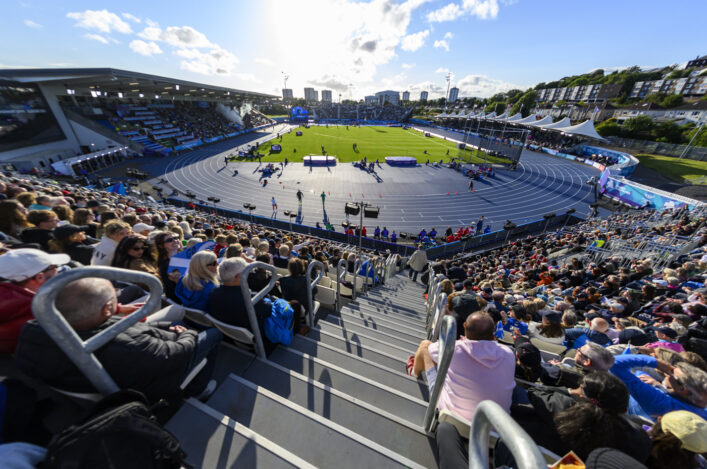
Scotstoun in the sunlight (photo by Bobby Gavin)
Colin Hutchison believes a strong club base – and volunteer support – can help athletics in Scotland build on Glasgow 2026.
Interest inevitably runs high in the immediate afterglow of a Commonwealth Games and of course this edition was a home event.
Responsibility for ‘Legacy’ can be a (very) grey area at times but our chief executive feels the structure of our sport is already in place to build on the Scotstoun feelgood factor.
A dozen years ago an eight-year-old boy from Troon was drawn into the sport with his twin brother by a ‘Come and Try Athletics‘ event held by Kilmarnock Harriers linked to Glasgow 2014. This year, 20-year-old Jamie Phillips was the Team Scotland picks as one of our top ranked 800m runers.
Replicating that anecdotal evidence is now the clear target . . .
‘We are all aware of the differences between the Glasgow 2014 and Glasgow 2026 and the much shorter lead-in time,’ said Colin.
‘However, things have also changed significantly in athletics in Scotland since then. The two or three years leading into 2014 saw the launch and growth of the Club Together programme and the focus in preparing for the Games was about growing capacity within our clubs.
‘Fast forward to 2026 and given the focus that has been placed on club and volunteer development over the past 12 years then I believe the infrastructure of the sport at a local level is good.’
Scotstoun thoughts: Why our Team Scotland athletes merit our support and admiration
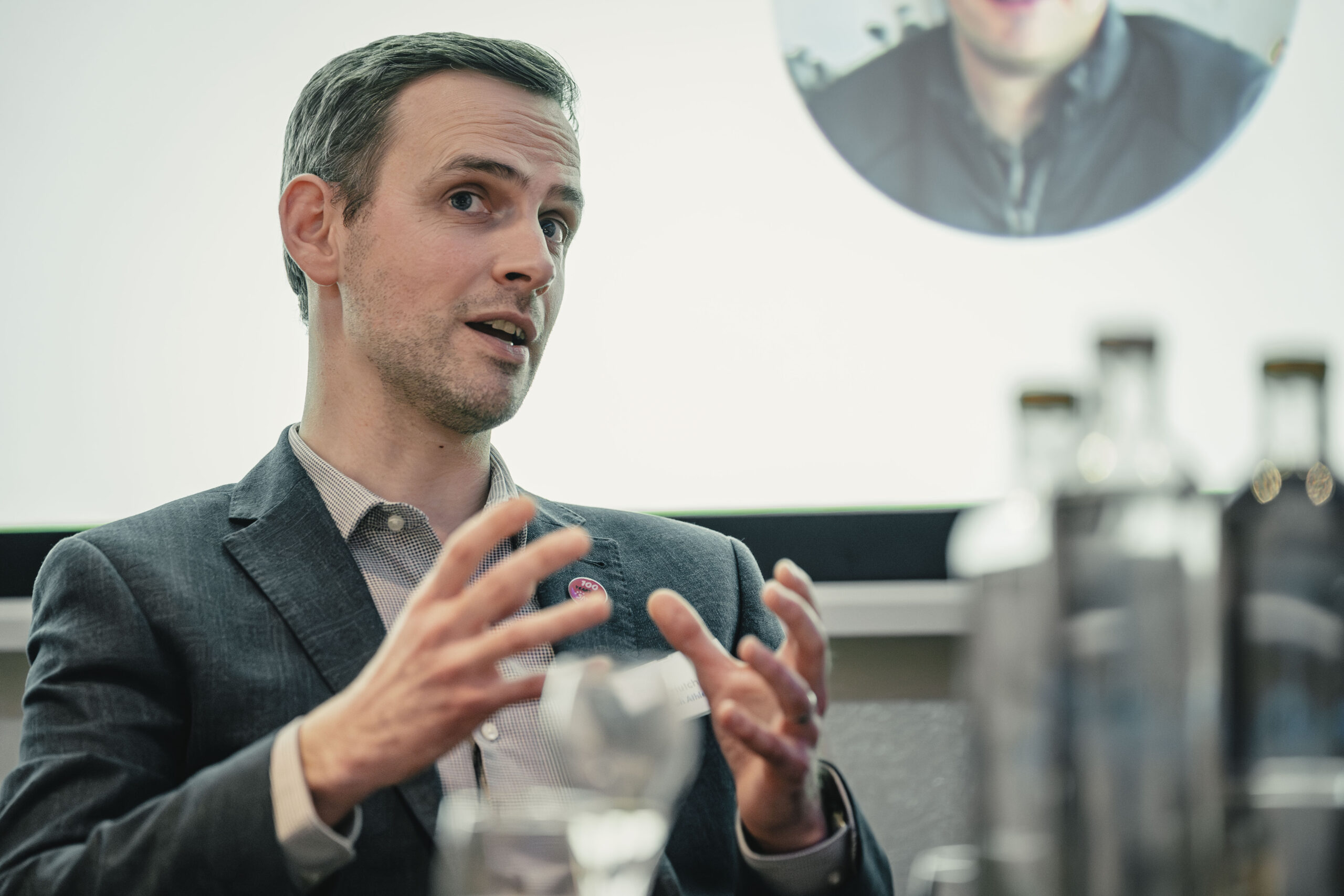
Colin Hutchison (photo by Jamie Simpson)
‘I firmly believe our clubs are already well positioned to take advantage of the increased interest the Games helps to generate.
‘Club Together continues to be our core development programme with an average growth in membership of 65 percent for the clubs involved.
‘From a governing body perspective we haven’t created any new programmes aligned to the Games; our focus is very much on continuing to advance the programmes that are already in place.’
A more specific legacy is a competitive one in terms of athletes and coaches.
It is a matter of record that two years after Glasgow 2014, the Scottish cohort within GB and NI team for the Rio Olympics was 15 athletes. That was the largest representation on a GB team at the Olympics since 1908 (and back then there was not a three per event restriction).
‘Undoubtedly the Games being in Glasgow and the increased focus on Scottish athletes plays an important role in inspiring the next generation,’ said Colin.
‘I’ve seen several stories over the last two weeks across the sports of athletes that are competing who attended events in 2014. Within athletics we shared images two weeks ago on the back of Josh Kerr breaking the World Mile Record that show him competing at a Scottish Schools event at Hampden in 2014.
‘We believe there were up to eight of our Glasgow 2026 team competing this week who took part in the same event.
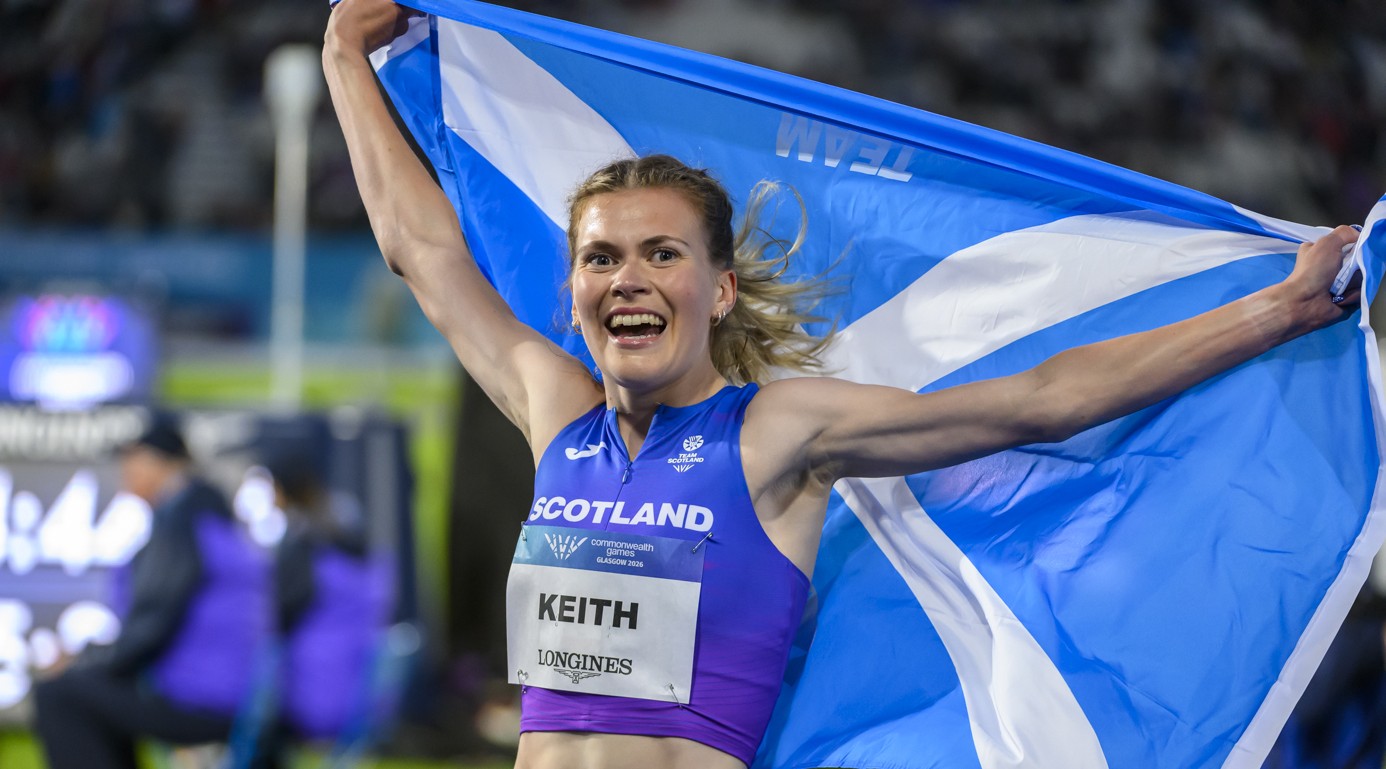
Megan Keith won bronze in the Women’s 5000m in her first Commonwealth Games (photo by Bobby Gavin)
‘We have seen the evidence in our sport over the last 10 years of how the success of Scottish athletes at the very top of the sport can inspire others within the performance system to believe that winning medals within Championships at that level is possible.
‘Further success at Scotstoun will hopefully will continue that trend.’
But, arguably beneath the elite, athletics in Scotland always comes back to clubs and volunteers (both coaches and Officials) delivering the pathway which then facilitates growth potential.
‘The clubs are the heartbeat of our sport and since 2014 (Covid years aside) we have seen continuous growth in athletics in Scotland,’ added Colin.
‘As I outlined, work doesn’t just start when there are Games. Year in, year out we are investing in the sport with our clubs to grow membership, improve access, develop athletes and develop volunteers.
‘We would anticipate an increase in membership on the back of the Games. However, as I’ve set out above, that has been the trend over a sustained period anyway. The Games has given us an opportunity to accelerate growth but it’s all about benefitting from the work clubs already do and the systems we have in place.’
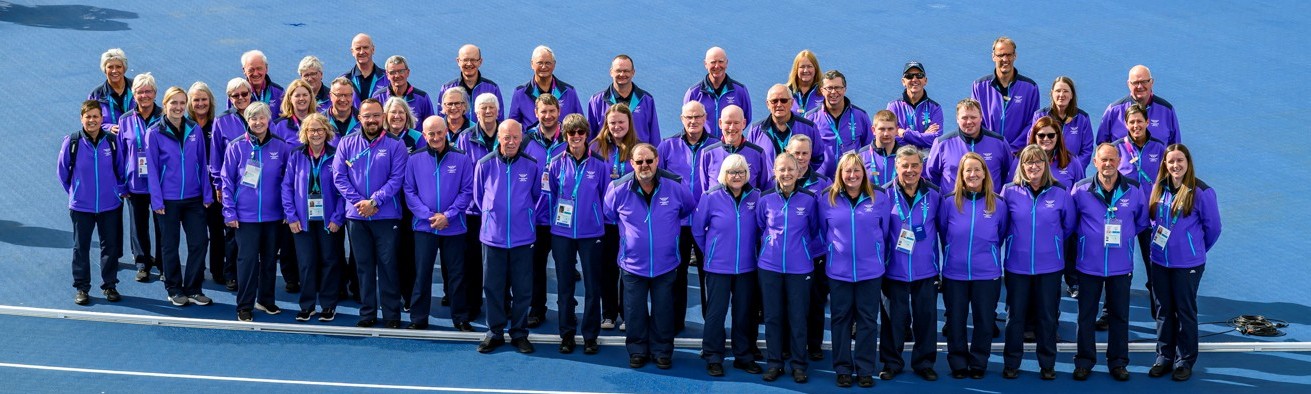
Photo by Bobby Gavin
‘Volunteer recruitment presents a challenge for all sports. However, we still have a group of 15-20 volunteers from Glasgow 2014 (not linked to athletics) who continue to support our Championship events at the Glasgow International Arena every year.
‘With 3000 volunteers supporting Glasgow 2026 there is a great opportunity for all the sports involved to ensure that they remain engaged as volunteers beyond the Games.
‘From an officiating perspective, we have over 80 Officials on duty at the Games. Not only is that a great sign of the high regard these Officials are held in, it also provides valuable international competition experience for 80+ officials who support Scottish National Championships every year.
‘That has a positive effect on competition delivery, athlete experience, and further opportunities for these officials to Officiate at other international events.
Together, We’re All In! Five organisations partner on legacy projects – Scottish Athletics
‘Finally, the Games has also provided us with an opportunity to bring together a group of partners we already work with individually to try and accelerate the work we are all doing to use sport as a vehicle to improve physical health, mental health, social health and wellbeing.
‘Similar to our work with clubs, this is not about creating new areas of work because the Games is on, it is about working together to strengthen what we do.
‘The partners we are working with are Scottish Action for Mental Health (SAMH), Scottish Disability Sport, Daily Mile, Glasgow 2026 and Junior Parkrun.
Tags: Colin Hutchison, Glasgow 2026
Latest Articles
Endurance Events
Latest Facebook update
Problem displaying Facebook posts. Backup cache in use.
Click to show error